
Our product
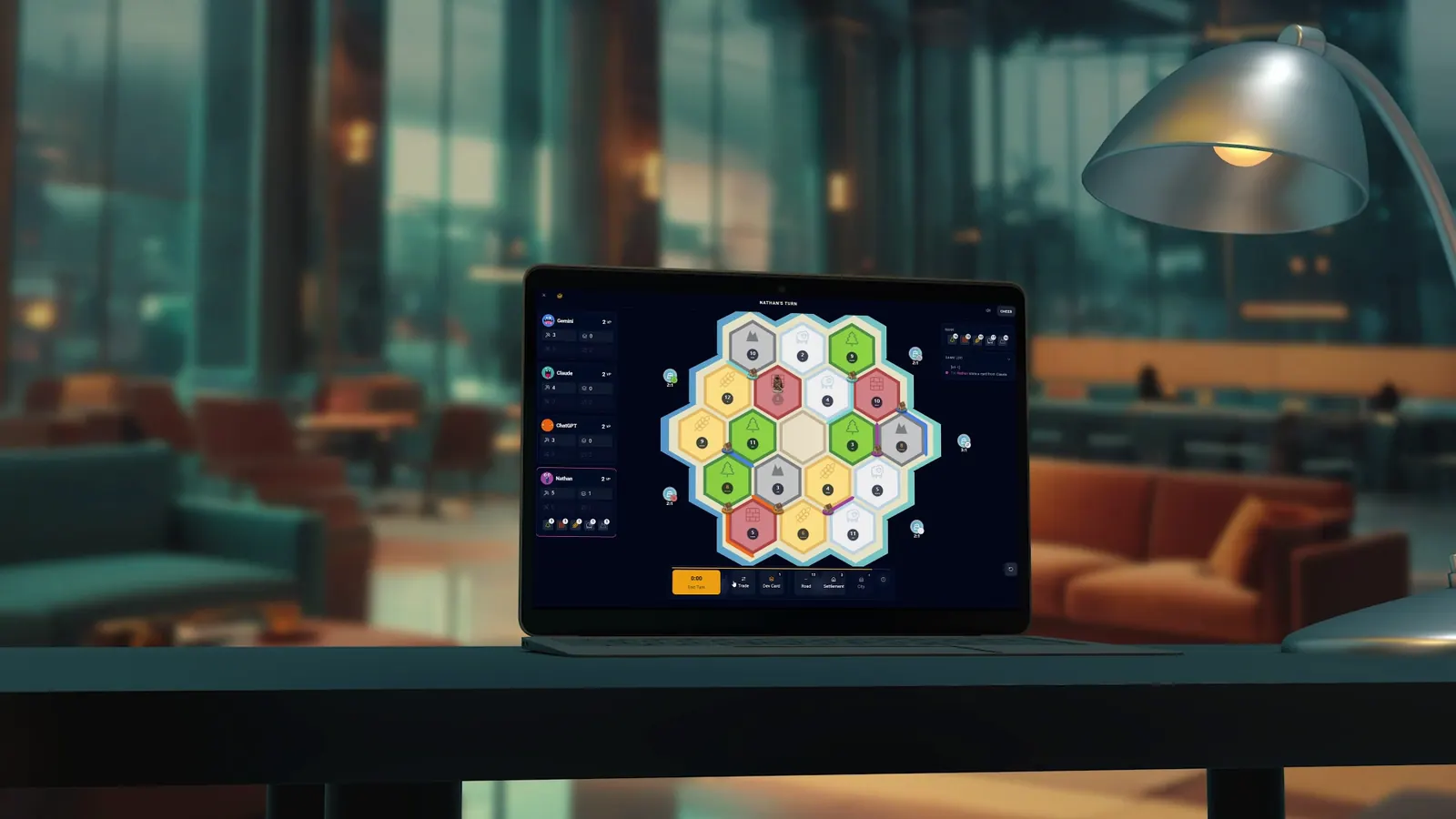
decks.app
From our family game night to thousands of users, with no advertising.
A real-time multiplayer game platform that turns the phones around a table into controllers. Simple enough for a 9-year-old and a 90-year-old, and good enough that players kept bringing their friends.
- Product design
- Real-time web app
- AI opponents
Client engagement
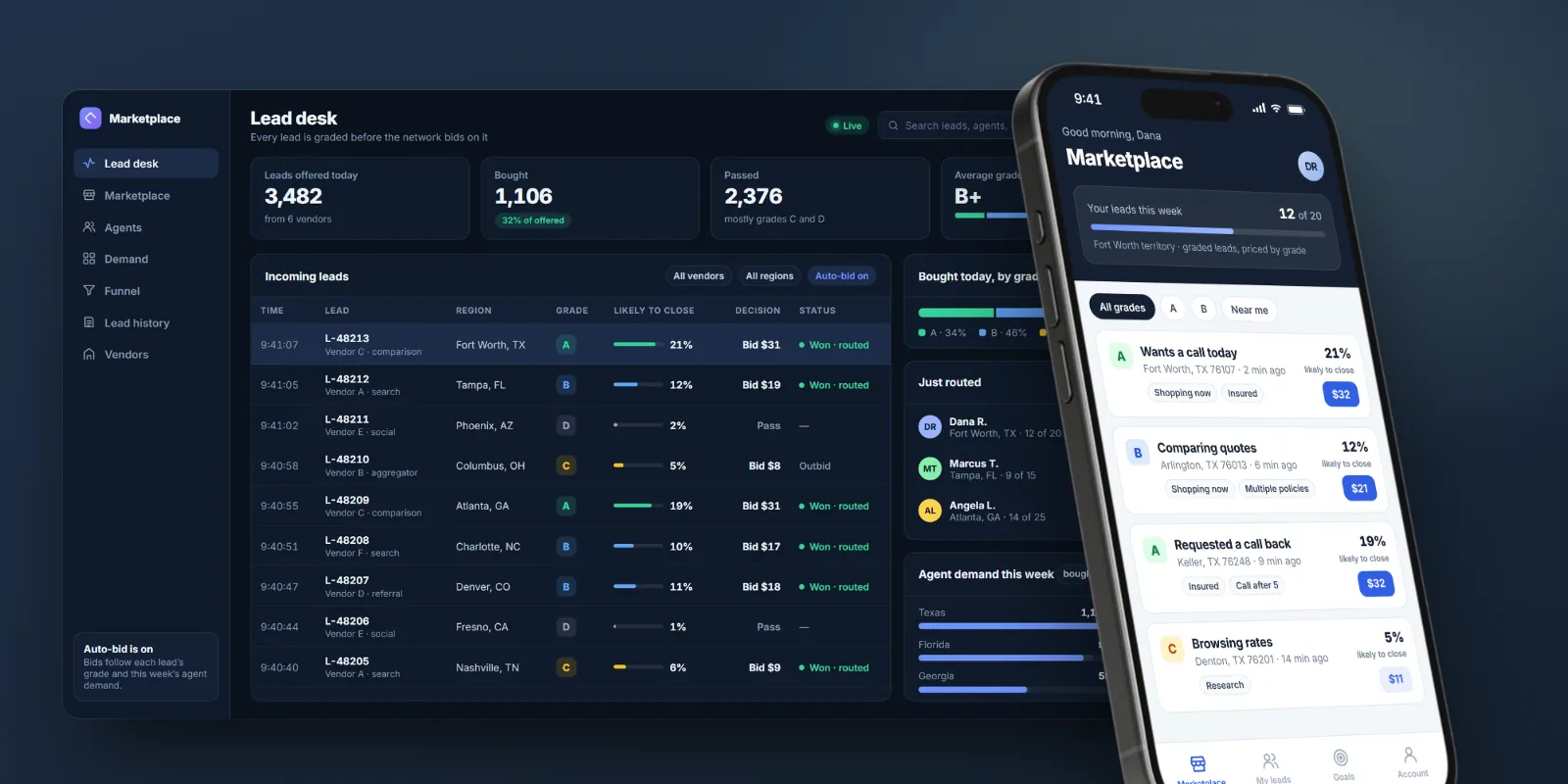
AI lead marketplace for a national insurance network
More than $2 million saved a year, and record-setting sales years.
Hundreds of independent agents were unknowingly bidding against each other for the same internet leads. We turned years of their lead receipts into an AI model that grades leads by quality, then built an internal marketplace where agents stopped competing with each other.
- AI lead scoring
- Data digitization
- Marketplace platform
Nonprofit partnership
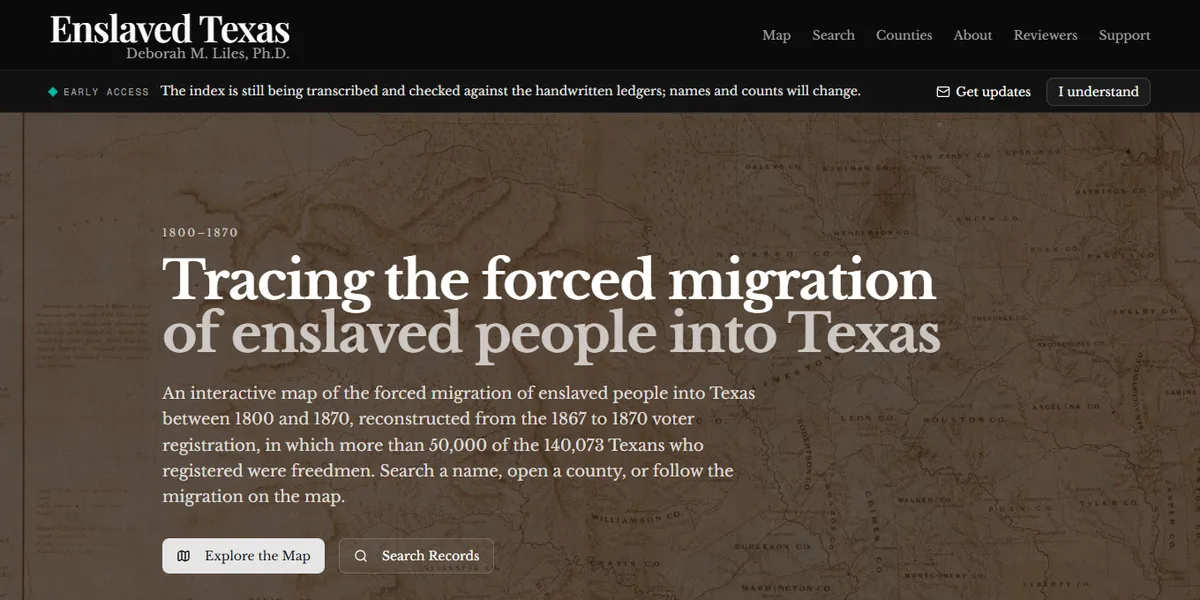
Enslaved Texas
More than 50,000 freedmen in the handwritten 1867 voter registers, now on a map anyone can search.
A nonprofit research platform led by historian Deborah M. Liles, Ph.D., tracing the forced migration of enslaved people into Texas. We design and build the map, the search and the AI tools that read 160-year-old handwriting, with people checking the machines’ work against the original pages.
- AI handwriting transcription
- Interactive maps
- Research data
Client engagement
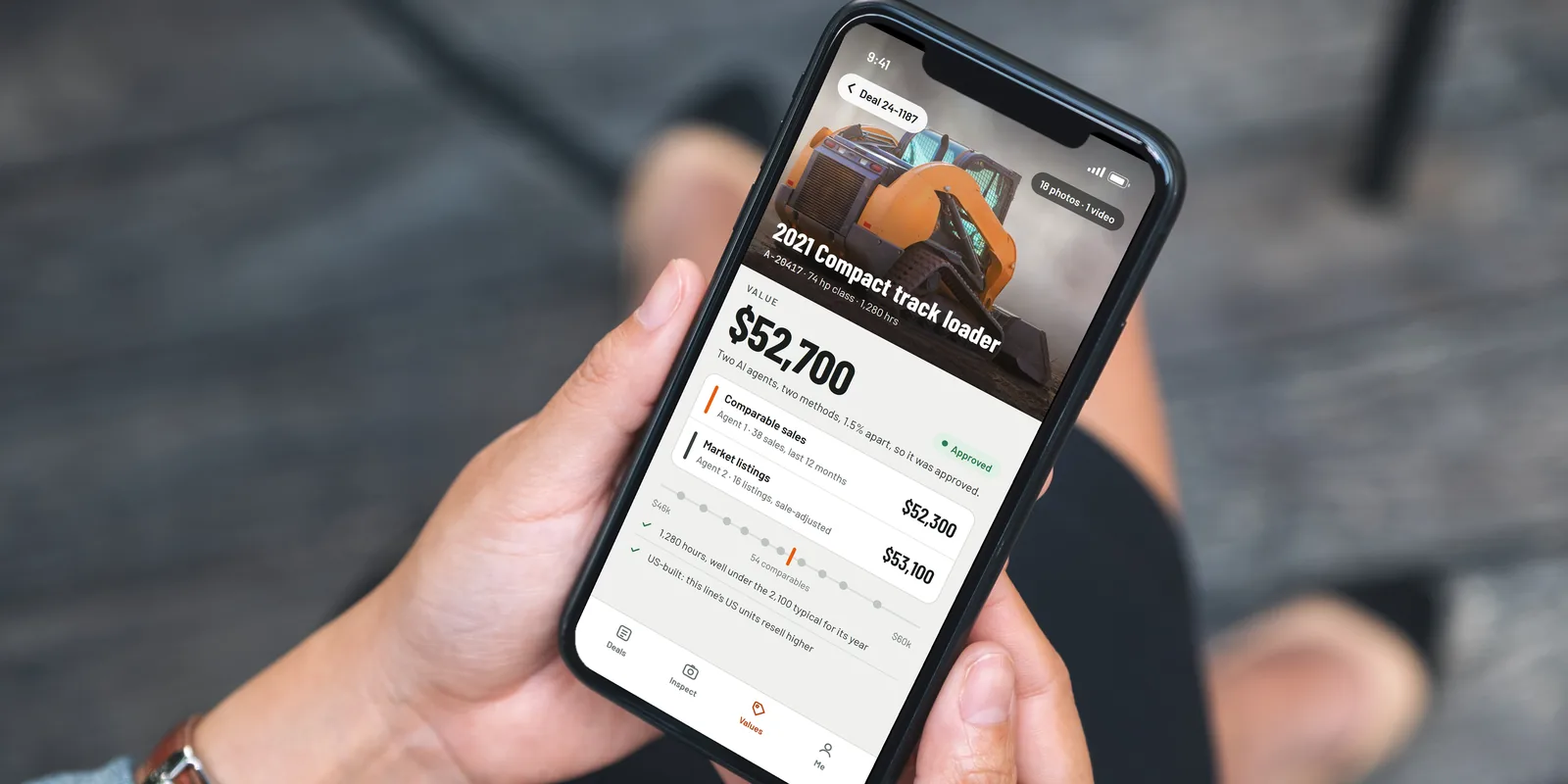
AI equipment valuation for an equipment finance company
Every machine valued twice, and growth that no longer waits on hiring evaluators.
Its know-how lived in thousands of one-of-a-kind spreadsheets, and the veteran evaluators who knew what every machine was worth were moving on. We had AI agents read a decade of workbooks into one platform, then built valuation agents that draw on those evaluators’ judgment and value every machine by two methods.
- AI valuation agents
- Data digitization
- Mobile field app