

Shadow AI is any AI tool your people use for work without the company’s approval, often through a personal account. It usually means people have found work AI can help with, not that they’re out to break rules. On September 29, 2026, OpenAI began rolling out always-on agents it calls dots, and that raises the stakes: the next shadow AI may not just read your data, but act on it.
If you run a company of 50 to 500 people, assume it’s already happening. In a survey Okta commissioned of 292 executives and 492 knowledge workers across seven countries, 52% of the workers admitted using AI tools without approval, and two-thirds of the American workers (67%) did. Meanwhile, 90% of the executives were confident in their organization’s visibility into AI tools.
What did OpenAI announce?
OpenAI announced dots, a new kind of always-on AI agent, on September 29, 2026. OpenAI’s announcement says each dot has its own cloud computer, can work toward a person’s goals around the clock, and can connect to more than 4,000 apps. People reach their dot in ChatGPT, Slack or Teams.
Dots are rolling out in ChatGPT to Pro and Business Premium users in eligible markets, with a beta for Enterprise workspaces once an administrator turns it on. The first dot comes with those plans at no extra cost. Specialist dots, which a company sets up for a defined job with their own access, start as focused enterprise pilots.
What does it change for a company your size?
It changes three things for a company your size: how easily anyone can get an agent, what an unapproved tool can do, and who sets the limits.
- An agent now comes with a plan someone may already pay for. Anyone on those plans can create a dot, and it keeps working on their projects while they do other things.
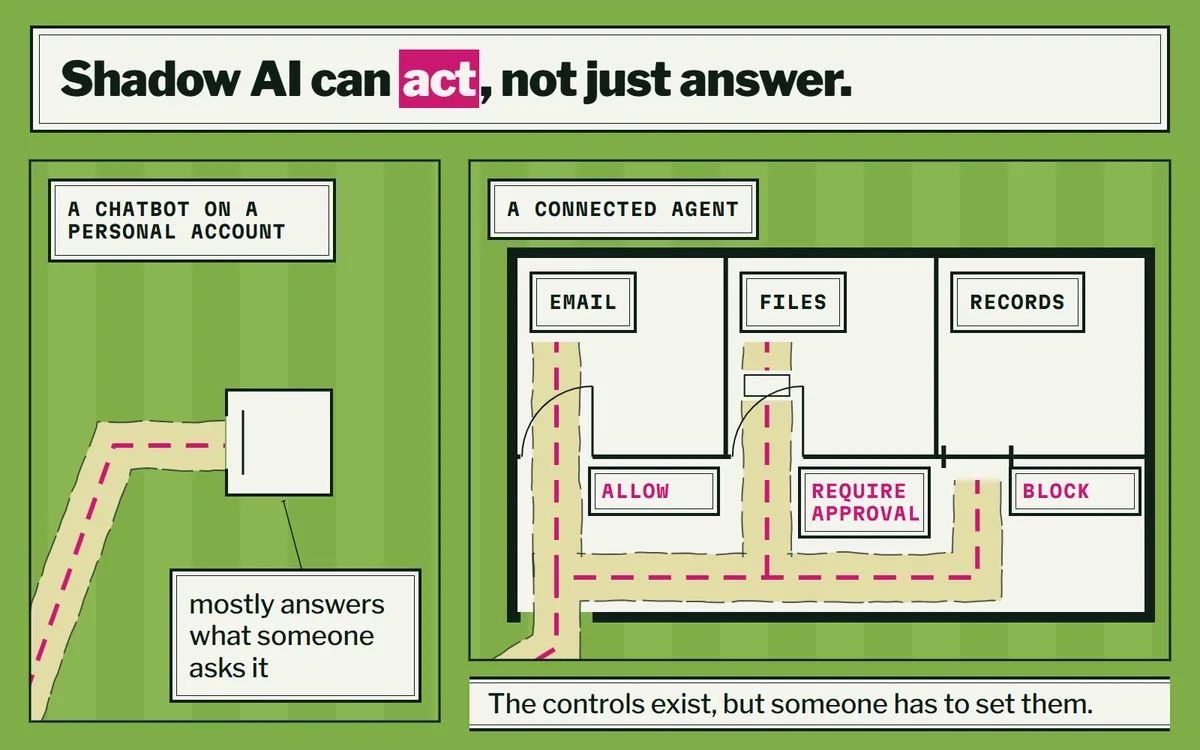
- Shadow AI can act, not just answer. A chatbot on a personal account mostly answers what someone asks it. OpenAI says a dot can do nearly anything using its own cloud computer, its own browser and the apps someone has connected.
- The controls exist, but someone has to set them. OpenAI says you choose which apps a dot can access, and Custom Rules let you allow specific actions, require approval or block them. On a personal account, the person setting those rules is the employee, not the company.
What doesn’t it change?
It doesn’t open every company’s data overnight, and it doesn’t change the basics of running an agent safely. The rollout goes plan by plan and market by market, and the dots a company sets up itself are still in pilots.
OpenAI’s own advice is the rule we’d give for any agent: “Dots can still make mistakes, so always review consequential work.” A person still approves anything costly or hard to undo, and one named person still owns each agent’s results. What’s new is how many agents may soon be running without anyone deciding those things.
Nor does it make the tools the enemy. OpenAI describes an early tester’s dot that noticed he’d forgotten to invoice a publication, prepared the invoice, and sent it after his approval. That’s the kind of help people go looking for, with the approval step in the right place.
How common is shadow AI, and why does it happen?
Shadow AI is common, and it happens mostly because the approved path is harder than the unapproved one. In Okta’s survey, the workers using unapproved tools also fed AI tools sensitive material: 54% shared internal messages and emails, 45% shared HR information, and 39% shared confidential company documents. That’s the real exposure: HR records and contracts that may be sitting in accounts the company can’t see or close.
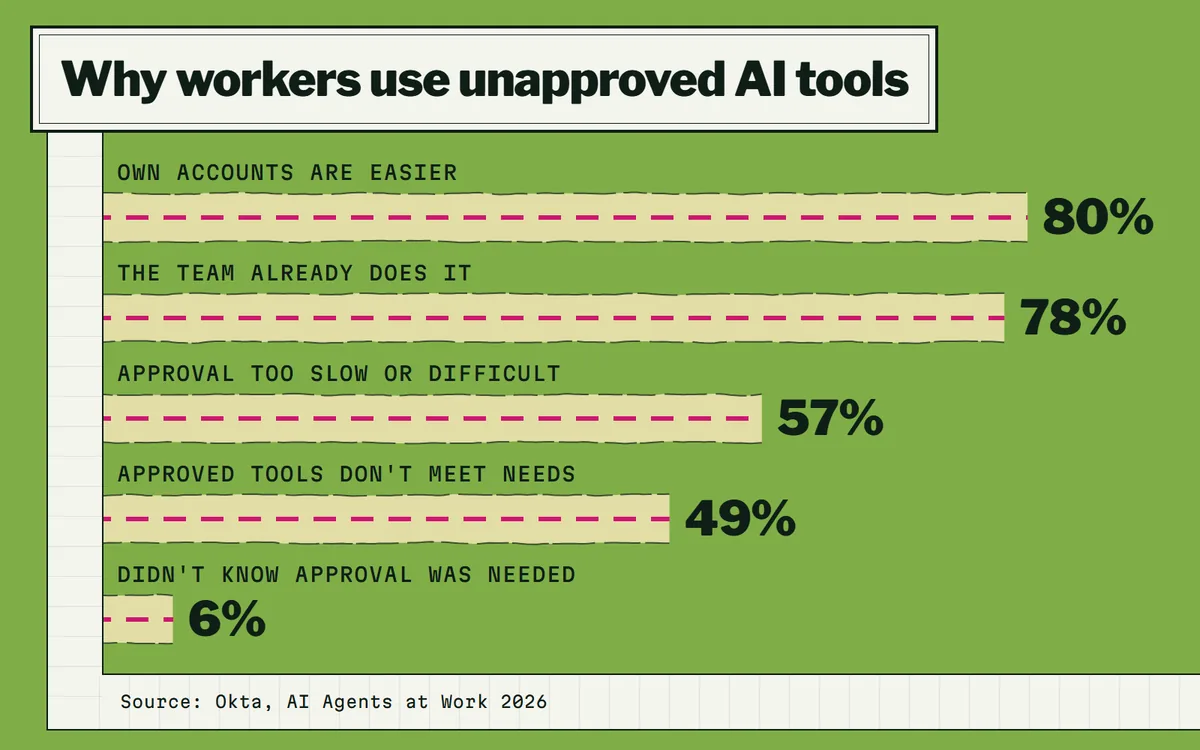
Asked why, those workers said using their own accounts was easier (80%) and that their team already did it (78%). Many said the approval process was too slow or difficult (57%), or that the approved tools didn’t meet their needs (49%). Only 6% said they didn’t know they needed approval.
Policies aren’t landing either. While 65% of the executives called their AI usage policies very clear, 57% of the workers disagreed. Almost nobody is unaware that approval is needed; they’re unserved by the way to get it.
What should you do now?
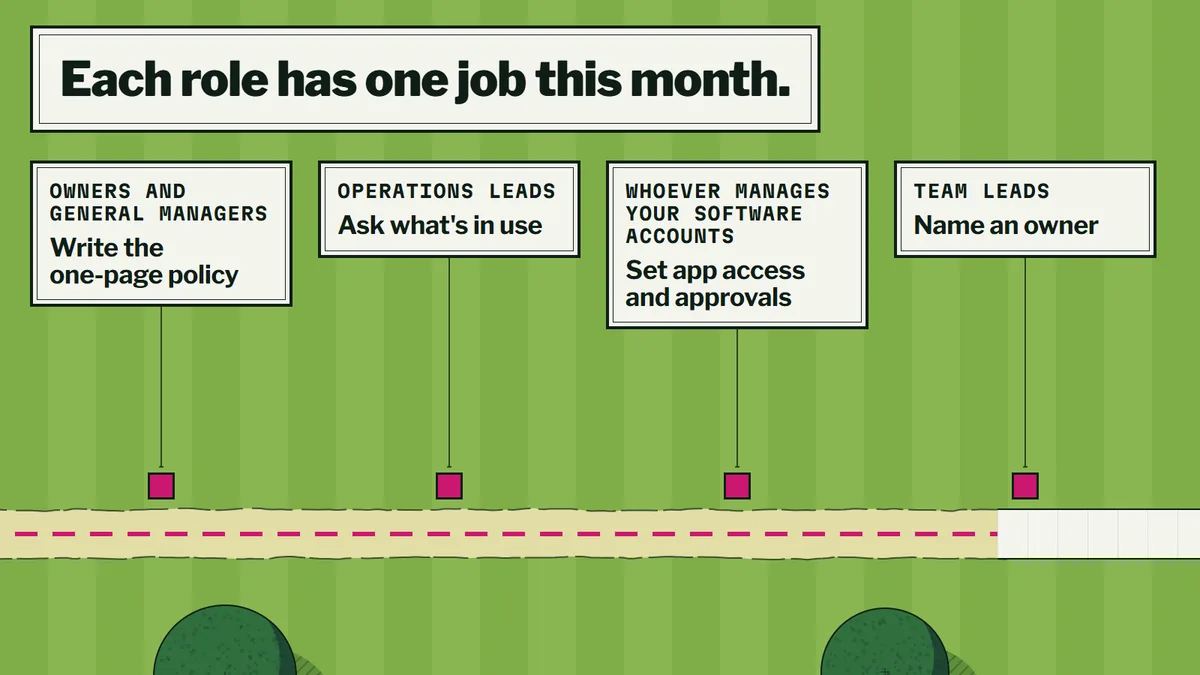
Start before agents spread: find out what’s in use, publish a short policy, and put a name on every agent. Each role has one job this month.
Owners and general managers
Write the one-page version of your AI policy: which tools are approved, what data never goes into anything else, and who owns each agent. Put it where people will find it, because a policy nobody can find doesn’t work.
Operations leads
Ask each team which AI tools they use and for what, and make it safe to answer. The list shows you where the hours go, and which jobs to give an approved tool first.
Whoever manages your software accounts
Check which AI plans the company pays for, and whether agents like dots are switched on. Decide which apps they may connect to, and which actions need a person’s approval. If people expense their own AI subscriptions, those receipts are part of your shadow AI list.
Team leads
Name an owner before any agent touches shared data or a customer. Route its consequential actions to a person, and check its work the way you’d check a new hire’s.
What’s the lasting fix for shadow AI?
The lasting fix for shadow AI is a sanctioned path that’s easier than the shadow one. Give people approved tools that do the job, a fast way to ask for a new one, data rules they can find, and an owner for every agent. A ban answers none of the reasons workers gave, and a request that waits a month for an answer sends people straight back to their own accounts.
The sanctioned version runs inside the systems you already use. For an equipment finance company, we built an asset platform with AI valuation agents, connected to the systems it already ran: its servicing and originations platforms and Salesforce. Two agents value every machine by two different methods, and evaluators decide when they disagree.
Your list of shadow tools is a head start on that work: it already shows where people want help, which is the first thing our process asks about. When you’re ready to turn the list into approved tools and agents with owners, we build AI automation into the systems you already run.